comicMemoriPhase 2 — Desk ManagementEpisode 5 of 37
Attention as a spotlight, why clutter hurts quality
Attention creates unequal, context-dependent emphasis among parts of a request. Clutter can introduce competing cues, and emphasis is not a guarantee of relevance or truth.

On this page
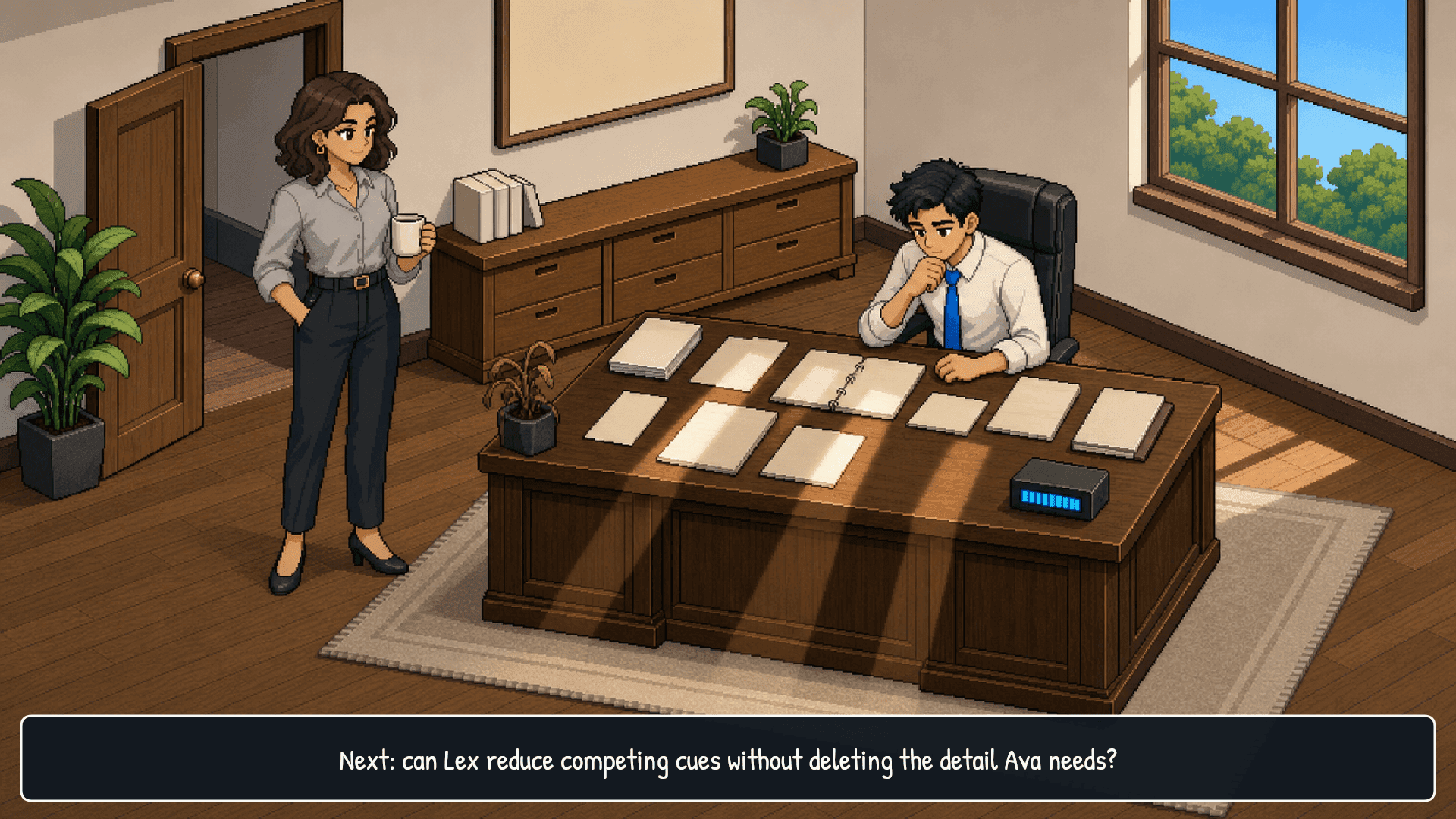
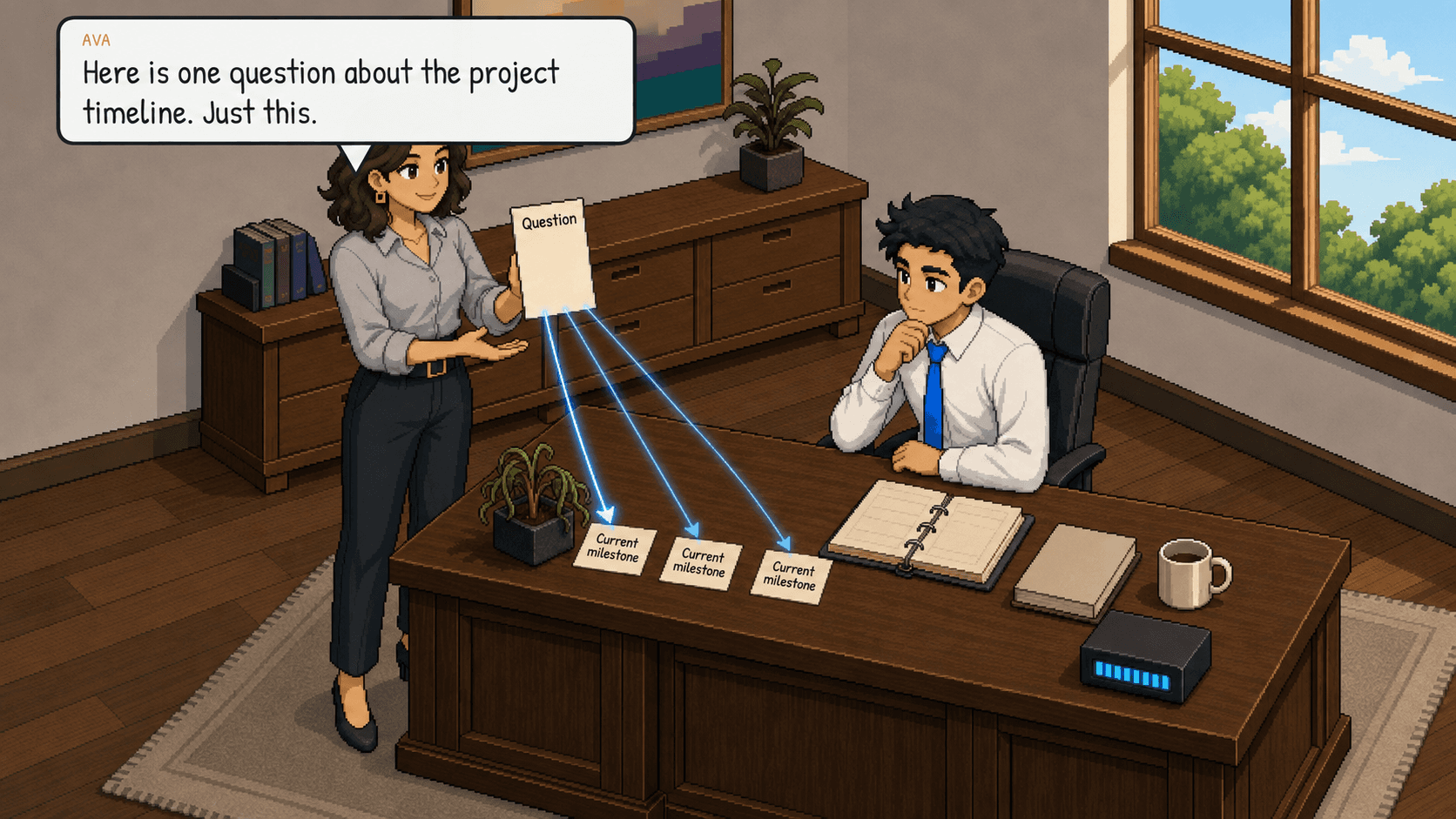
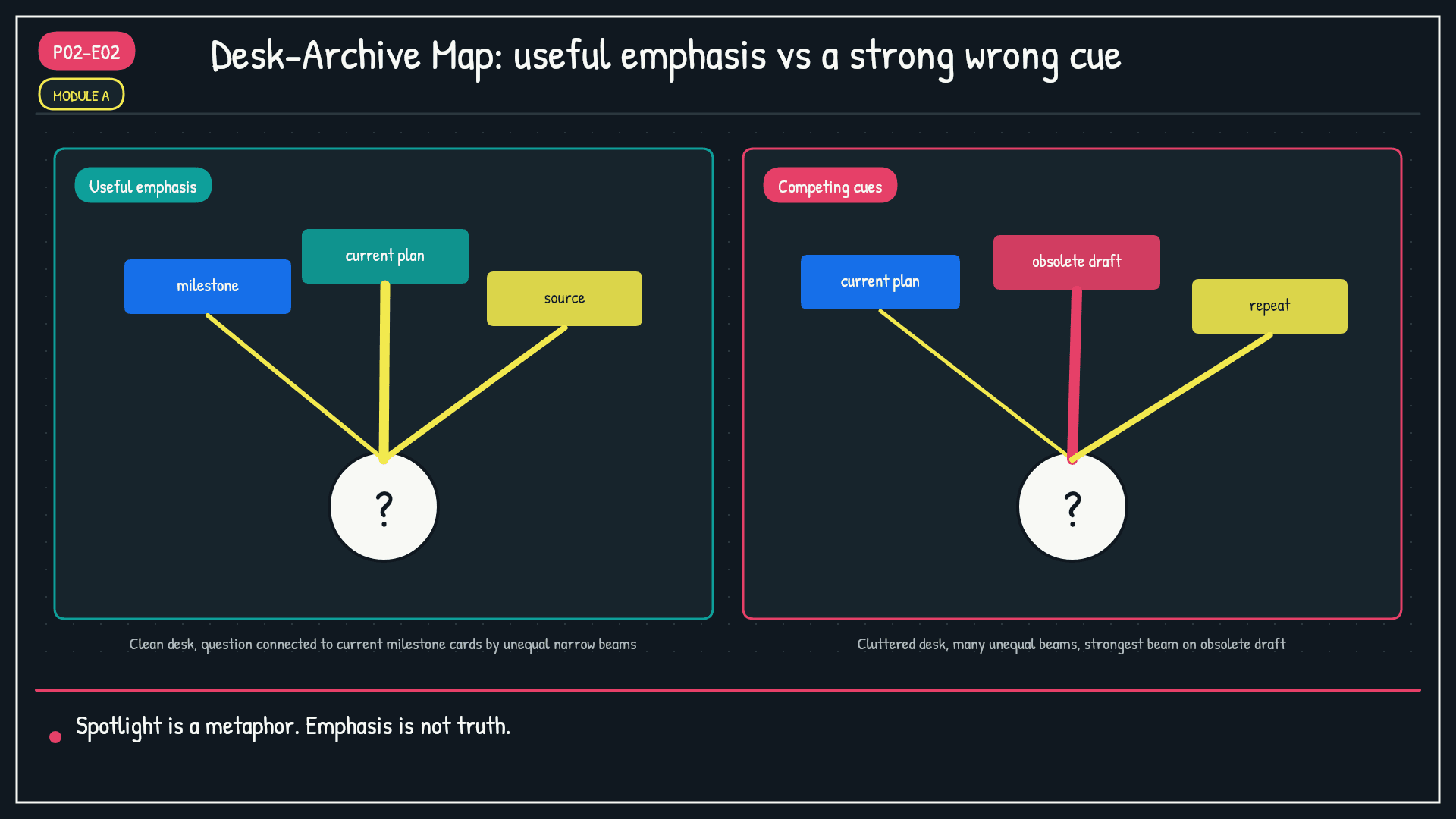
Spotlight beams appear above Lex's desk for the first time. On a clean task, several bright beams connect the question to the current timeline cards. After clutter arrives, the beams stay unequal, but the brightest one lands on an obsolete plan.
The context window is the active token workspace assembled for one model call. Context bloat is the redundant, irrelevant, or conflicting material that crowds useful evidence on that desk.
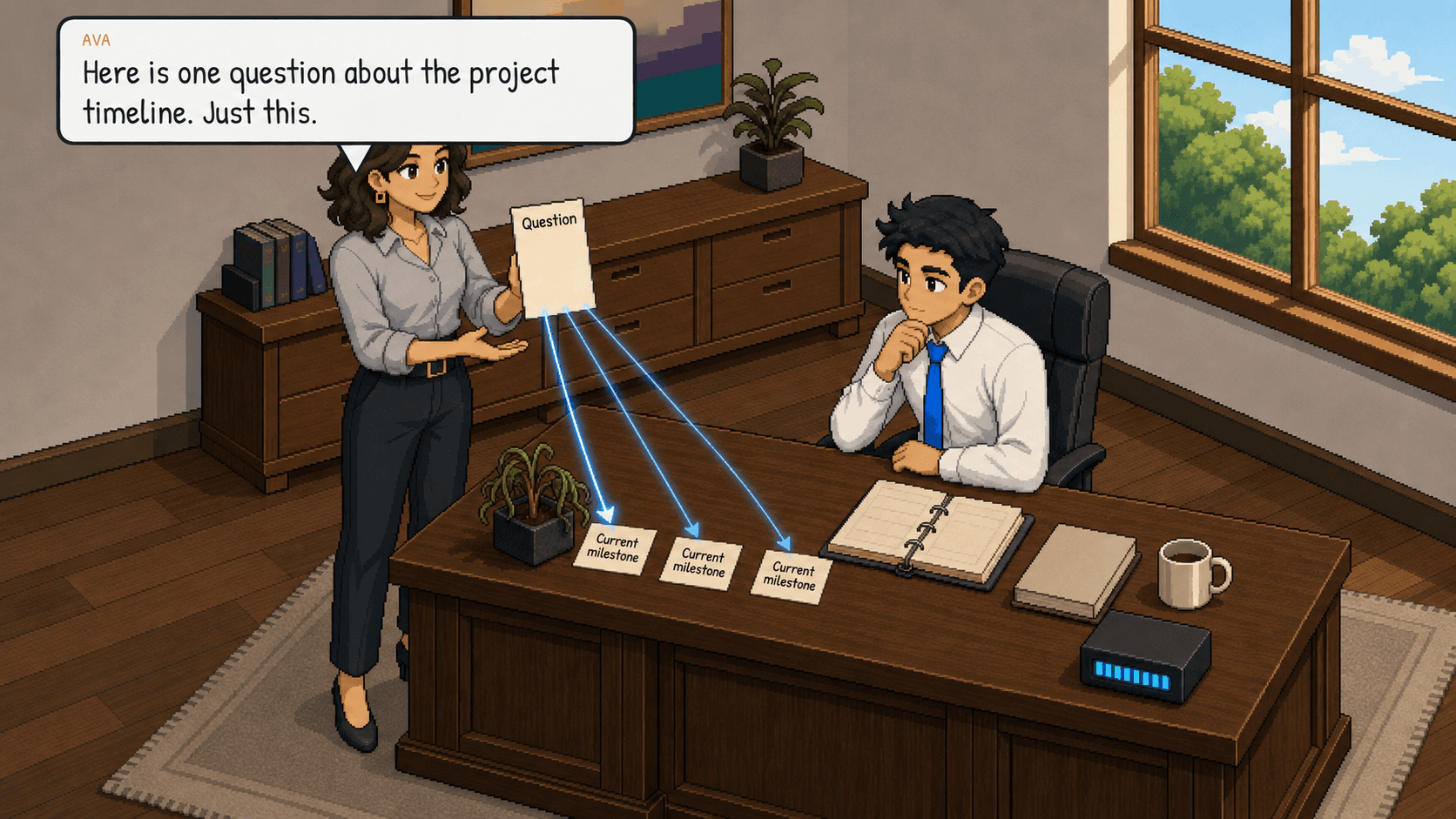
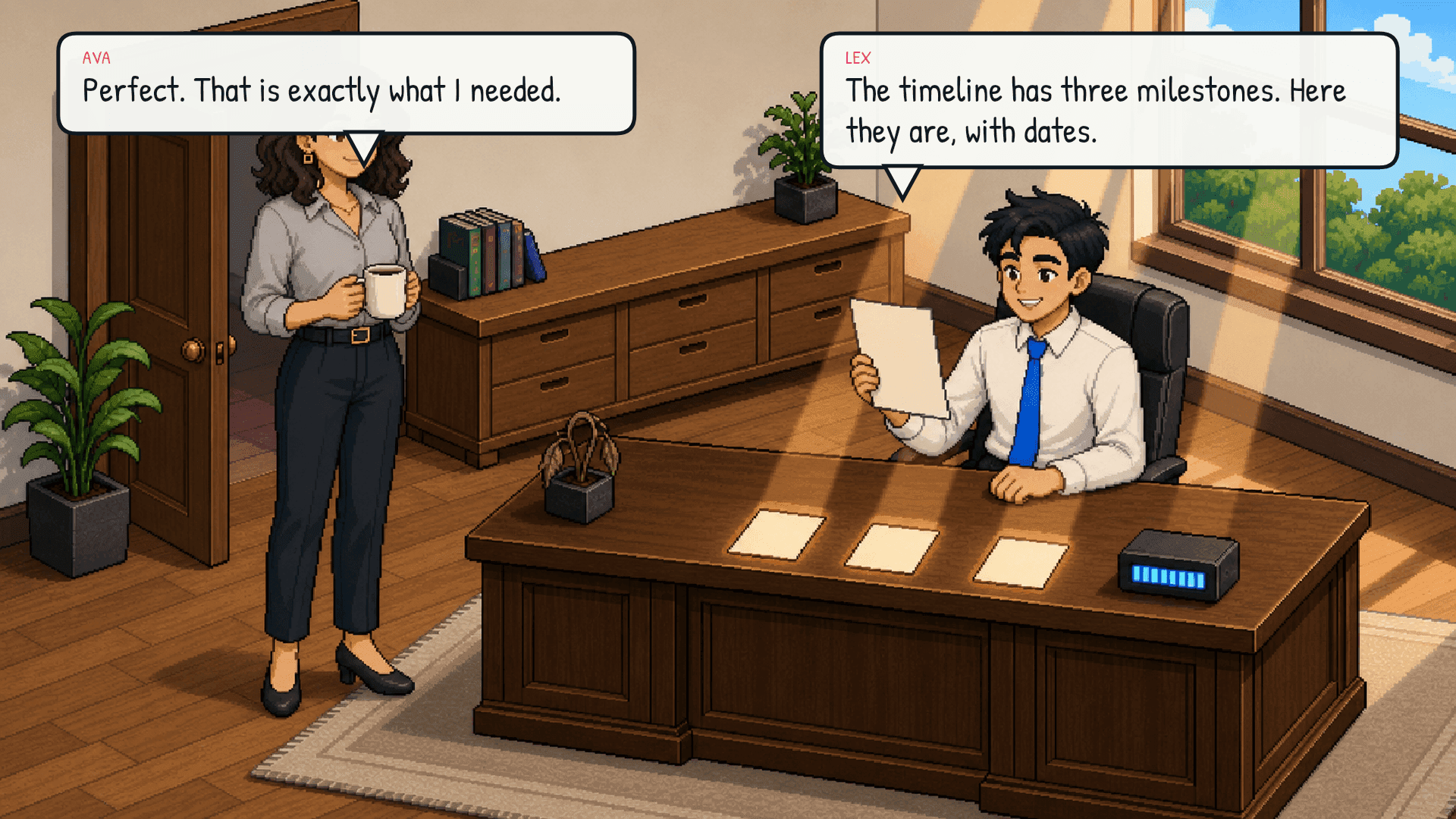
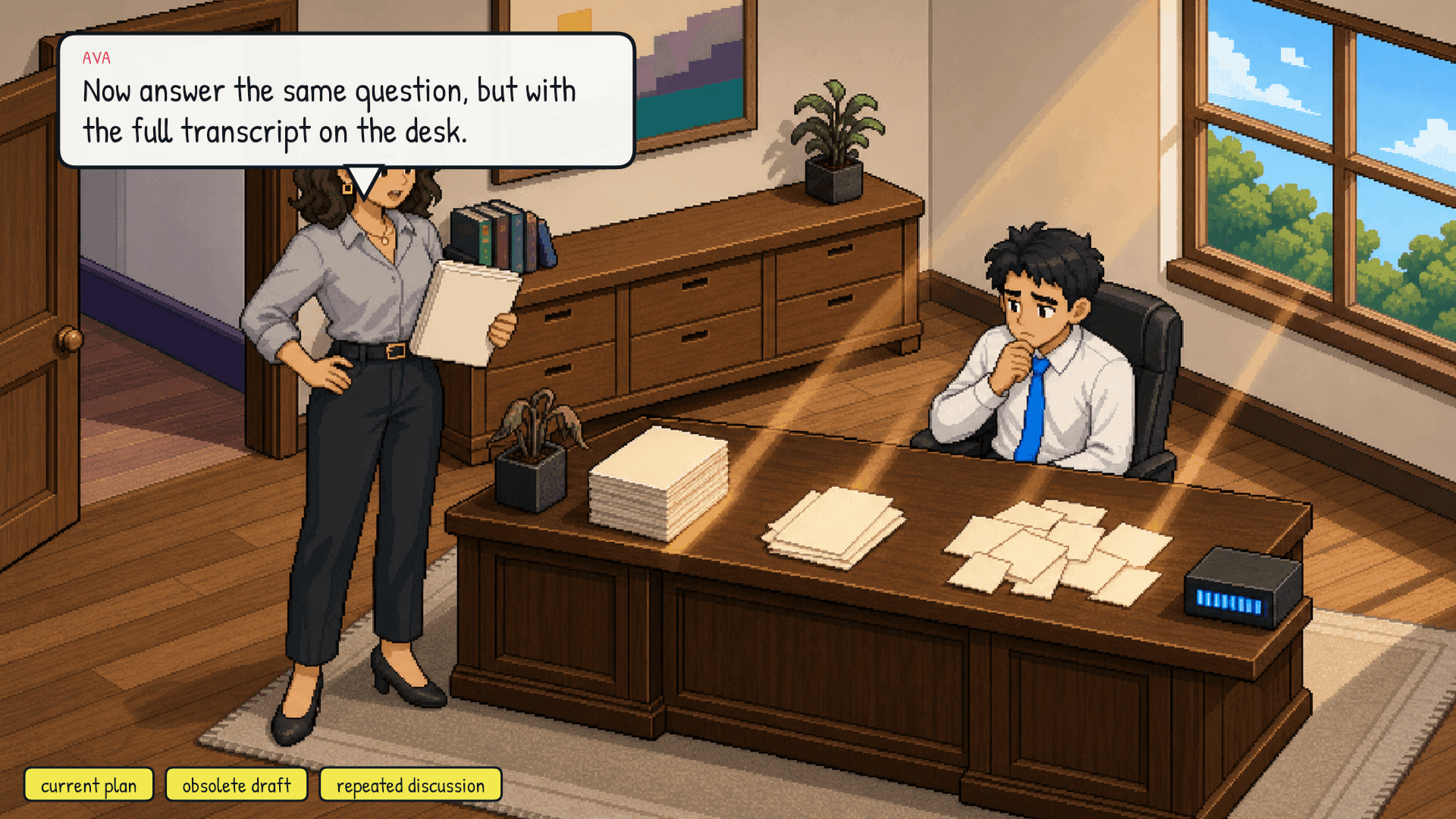
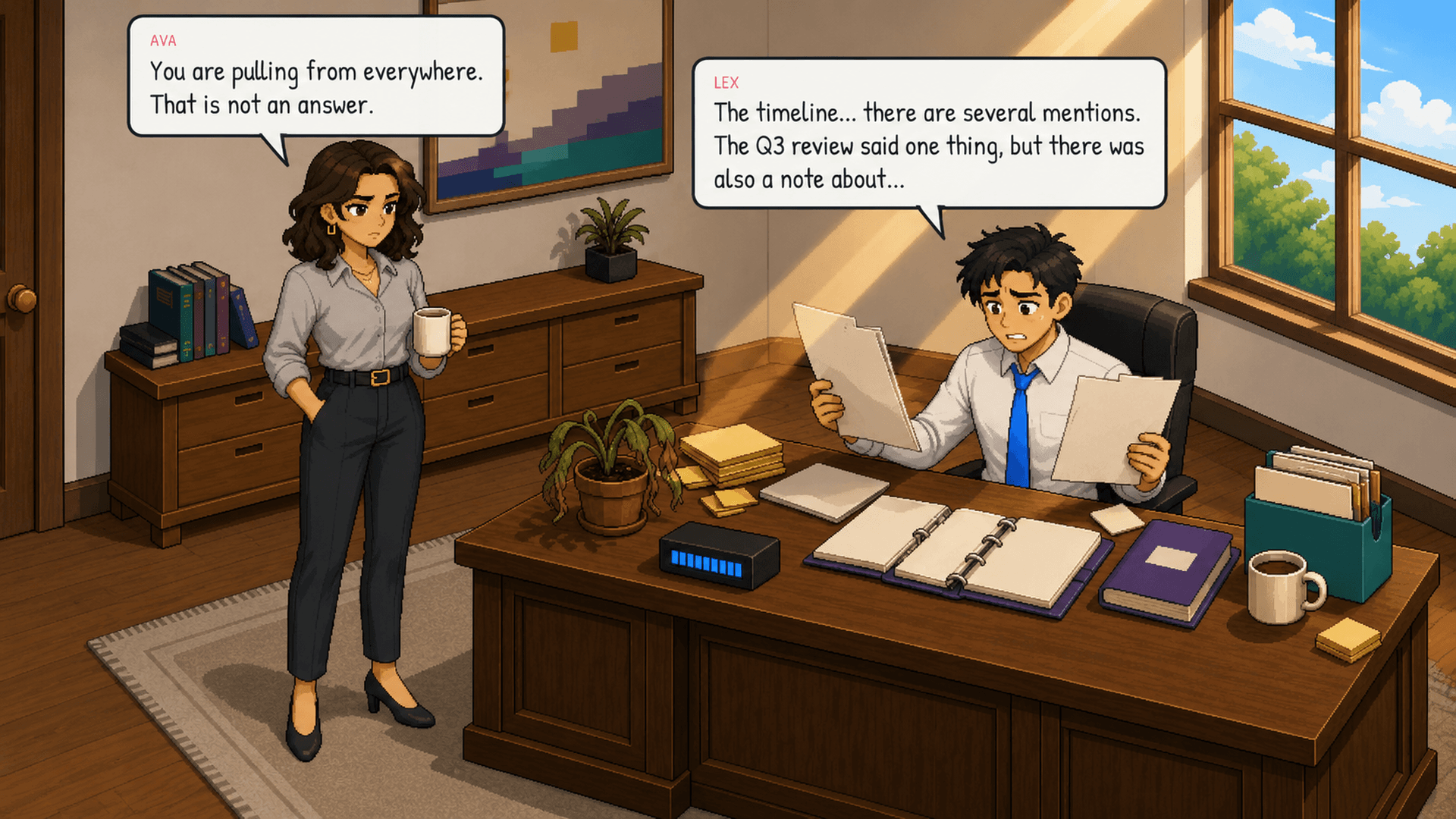
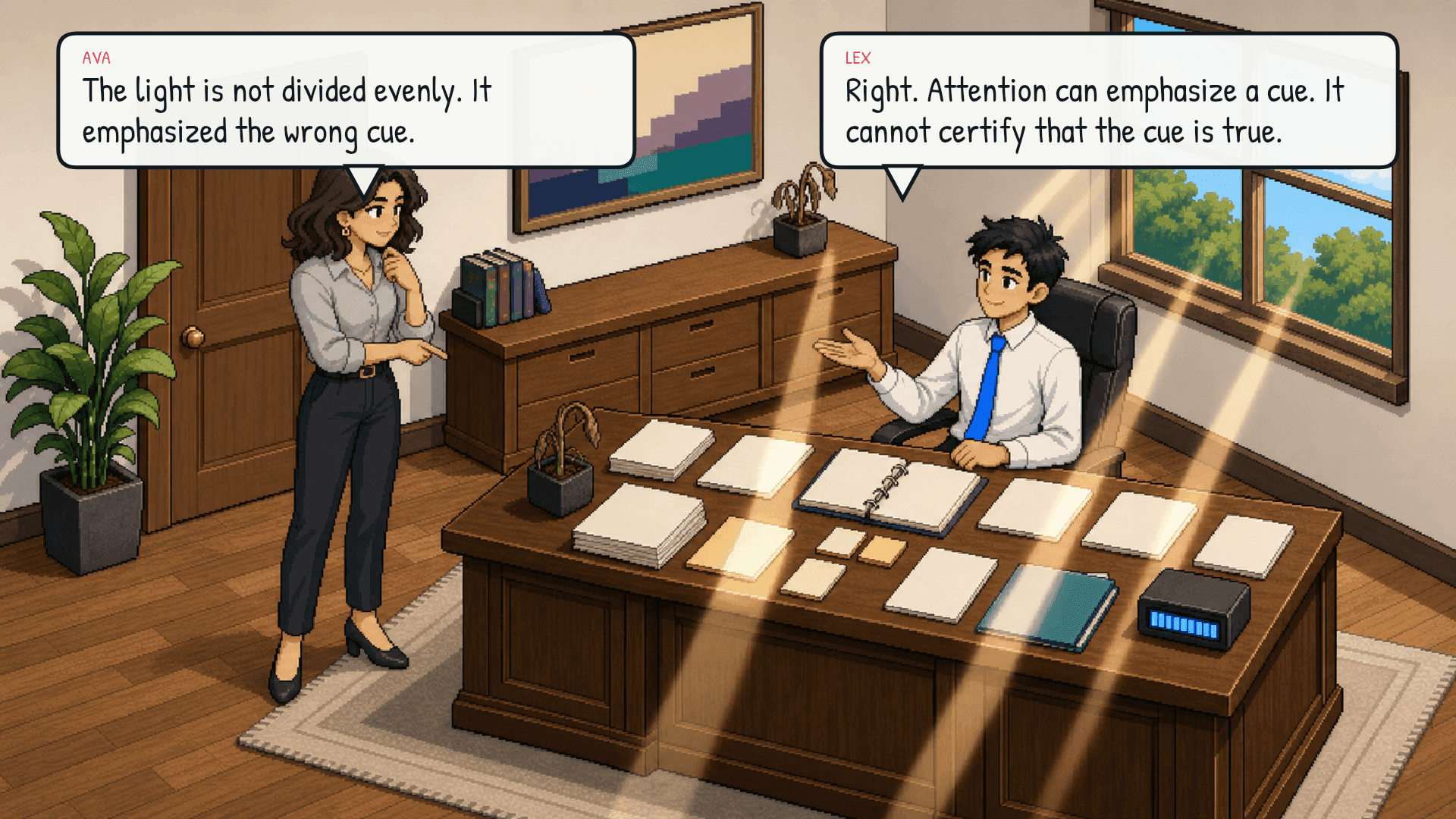
Problem: The same question produces a worse answer after competing and obsolete cues change which connections become influential.
Resolution: The reader sees attention as context-dependent emphasis among connections. A brighter connection means greater influence on the response, not truth, authority, or user intent.
Section 1: The spotlight on the desk
In the last episode, we saw that extra low-value content can make an answer worse. Attention is part of the explanation. It helps the model connect parts of the request while producing a response, and those connections change with the surrounding content.
The comic renders those relationships as spotlight beams. If Ava asks about a timeline, beams may connect the question to dates, project names, and milestone cards. Different connections can matter for different parts of the response. There is no single global beam that explains every decision.
The spotlight is a useful entry point, not a literal claim that the model deliberately scans pages like a person. It shows a practical idea: the presence of a page does not guarantee that the response will use it correctly.
Section 2: Why clutter degrades quality
Attention can make one connection more influential than another. Those internal relationships are context-dependent and are not document-level rankings that a user can treat as a source-of-truth list.
Clutter can introduce competing patterns: a repeated obsolete date, a misleading header, or contradictory versions of the same plan. The model may then blend facts, cite a superseded detail, or hedge between conflicts. That failure is possible, not inevitable, and it cannot be diagnosed from one attention map alone.
This is quality degradation from noise. The relevant page may still be present, but presence does not guarantee correct use. Position, wording, request structure, and the model's learned patterns can all affect the result.
Section 3: Emphasis is not truth
It is tempting to treat the brightest beam as the page the model believes most. That story is too simple. The beam is only a teaching metaphor for influence within a response, not a confidence score, a fact check, or a statement of user intent.
A shorter, focused prompt can still outperform a longer cluttered one because it removes competing cues and makes the desired relationship clearer. But fewer pages do not guarantee better attention, and longer context is not inherently bad. Relevant definitions, evidence, and constraints can improve the answer.
The practical rule is not "always use fewer tokens." It is "make authority and relevance legible." Remove superseded material, label current sources, state how to resolve conflicts, and ask for evidence. Strong internal emphasis is not proof that a source is current or true.
Glossary
- Attention mechanism
- A process that helps the model connect parts of the current request while producing a response. | Office analogy: Spotlight beams connect the question to different cards with different brightness. | Example: A timeline question may connect strongly to an obsolete date unless the current plan is clearly labeled.
- Quality degradation from noise
- Reduced reliability when redundant, irrelevant, misleading, or contradictory material interferes with using the right evidence. | Office analogy: The brightest beam lands on an obsolete plan while the current plan remains on the desk. | Example: A meeting summary reports a proposal that was later reversed.
- Context bloat
- When the desk fills with redundant, irrelevant, or conflicting material that makes useful evidence harder to use reliably. | (origin: P02-E01)
- Context window
- The active token workspace assembled for one model call. | (origin: P01-E01)
Try it yourself
- Ask an AI the same question twice: once with a short, focused prompt and once with the same question buried in a large block of unrelated text. Compare which answer is more precise.
- Take a long prompt that produced a mediocre answer. Remove everything except the question and the most relevant context. Resend it and see if the quality improves.
- Notice when an AI response seems to "wander" or mix in off-topic information. Check whether the input included content that could have distracted the spotlight.